Most businesses already have cameras in place, and from a distance, it feels like the property is covered. Footage is being recorded, systems are running, and there is an assumption that this level of visibility equals protection. All is good right?
ATI works with businesses across San Bernardino and the Inland Empire that discover this difference after an after-hours event. Activity takes place on the property, the system captures it, and by the time it is reviewed, the situation has already played out. The cameras did exactly what they were designed to do, but they did not change the outcome. That gap is where remote guarding becomes relevant.
The Difference Between Recording and Response
Traditional video surveillance is built to document events, creating a record that can be reviewed later, but it does not influence what is happening in real time. That distinction becomes more noticeable after hours, when facilities are unoccupied and response depends on how quickly activity is identified and addressed.
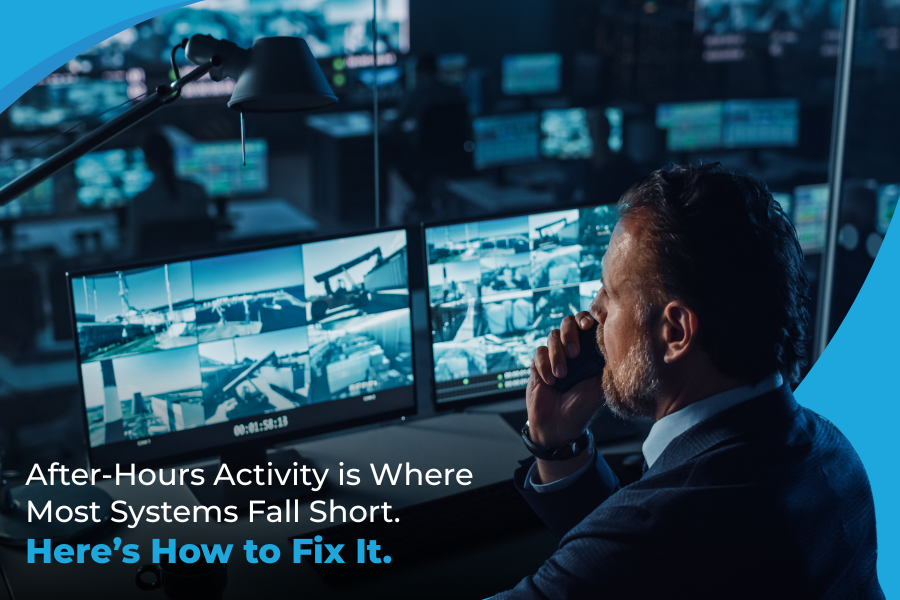
Remote guarding introduces a layer of response by pairing cameras with trained operators who actively monitor activity and assess situations as they develop. When something out of the ordinary is detected, it is reviewed immediately rather than hours later, which changes the role of the system from passive documentation to active oversight.
What Remote Guarding Actually Does
Remote guarding is not simply additional monitoring, it is a structured response tied directly to what your cameras are seeing. When activity is detected, operators review live video and determine whether the situation requires intervention, allowing decisions to be made in real time instead of after the fact.
If intervention is needed, the response typically follows a clear progression:
- Live video is reviewed to confirm the activity
- A verbal warning is issued through onsite audio systems
- Authorities are contacted if the situation continues
That interaction makes it clear the property is being watched, which often stops activity before it escalates. The difference is not just visibility, it is the ability to act while the situation is still unfolding.
If your cameras are only being reviewed after the fact, ATI can show you how remote guarding adds real-time response to your system. Call 951-374-1551 to schedule a walkthrough.
Where It Has the Most Impact
Remote guarding is most effective in environments where activity is limited but exposure remains, particularly in properties with open areas, multiple access points, and consistent after-hours risk. Warehouses, construction sites, retail properties, and multi-tenant facilities often fall into this category, where parking lots, loading zones, and perimeter areas become the starting point for most incidents.
Without active oversight, those areas rely entirely on recorded footage. With remote guarding in place, they become part of a monitored environment where activity is addressed as it occurs rather than reviewed later.
Working With What You Already Have
Adding this level of protection does not always require replacing existing equipment. ATI evaluates current camera systems to determine whether they can support remote guarding, focusing on coverage, camera quality, and communication paths.
In many cases, adjustments can be made to improve performance and allow monitoring to be layered onto the system without starting over. Where gaps exist, they are addressed with targeted changes rather than full replacement, keeping the focus on improving performance instead of adding unnecessary complexity.
A More Practical Standard for Security
When cameras are paired with active monitoring, expectations shift. The system is no longer measured by whether footage exists, but by whether it provides visibility and response when it is needed.
ATI provides remote guarding solutions backed by professional monitoring, giving businesses a way to extend oversight beyond operating hours without relying on on-site personnel. For many properties, this creates a more consistent and manageable approach to after-hours security.
When It Matters Most
After-hours activity is where most systems are tested, and it is also where the limitations of passive recording become clear. A system that records events provides information later, while a system that is actively monitored has the ability to influence what happens in the moment.
ATI works with businesses throughout San Bernardino and the Inland Empire to implement remote guarding in a way that aligns with how their properties are used. If you want to understand how your current system would perform during an after-hours situation, call 951-374-1551 or contact ATI to schedule a consultation.