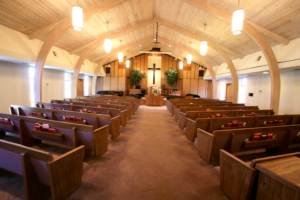
Churches rely on trust to manage access, and in many cases, that approach works during normal operations. Staff, volunteers, and group leaders move through the building throughout the week, often using the same doors and shared keys. ATI works with houses of worship across San Bernardino and the Inland Empire that operate this way, where access is understood informally rather than tracked directly.
The limitation shows up when something needs to be confirmed. At that point, the question is no longer who should have access, it is who actually used it and when. If that answer is not clear, the system supporting the building is not keeping pace with how it is being used.
Church Access Has Quietly Outgrown the Key Ring
Church buildings are now used throughout the week for a wide range of activities, and each of those activities brings different people into the building at different times. Classrooms, offices, and shared spaces are accessed by multiple groups, each operating on their own schedule and often using different entry points.
As that activity expands, access expands with it. Keys are distributed over time, responsibilities shift, and entry patterns change, but the system used to manage access remains the same. Over time, it becomes difficult to maintain a clear understanding of who can enter specific areas and when those areas are being used.
This is not a failure of process. It is the result of a building that has evolved beyond the system that was originally put in place to manage it.
What Access Control Changes
Access control replaces shared keys with credentials tied to specific individuals and permissions. Entry can be assigned based on role, location, and schedule, and it can be adjusted as responsibilities change without needing to recover or redistribute keys.
Every access event is recorded, which provides a reliable record of who entered a specific area and when that access occurred. This removes uncertainty and gives leadership a clear way to review building activity when questions arise, without relying on memory or assumption.
If you would like ATI to review how access is currently managed across your building and identify where visibility can be improved, call 951-374-1551 or schedule a walkthrough.
Where Video Becomes Part of the System
Access control provides a record of entry, but video surveillance provides the context needed to understand what actually took place. When the two systems are aligned, an access event can be matched directly to video at that moment, allowing activity to be reviewed without searching through unrelated footage.
This connection creates a more complete view of movement through the building and allows decisions to be based on clear information rather than partial details. For churches with multiple programs and shared spaces, that level of visibility is difficult to achieve without both systems working together.
After Hours Requires a Different Approach
When the building is unoccupied, the level of oversight changes even though access points remain active. Cameras continue recording and alarm systems remain in place, but without real-time visibility, activity is only discovered after it has already occurred.
Remote guarding introduces active monitoring during those hours by having trained operators review camera activity as it happens. When something requires attention, they can respond in real time, which allows situations to be addressed instead of reviewed later. This provides a level of oversight that does not require additional staff onsite.
What Matters When You Evaluate a System
Security systems are not evaluated during routine use, they are evaluated when something needs to be confirmed. At that point, the system either provides a clear answer or it does not.
ATI works with houses of worship across San Bernardino and the Inland Empire to align access control, video, and remote monitoring with how their buildings are used throughout the week. The focus is on creating systems that provide clarity and consistency without adding unnecessary complexity.
If you would like a walkthrough of your facility and a clear assessment of your current system, call 951-374-1551 or contact ATI to get started.